BLOG

How Smart Leaders use DISC to Transform Teams in Ways that Actually Work

Kathleen Winsor-Games • March 2, 2026

Part I of a two-part series on applying the DISC Profile to transform leadership and culture.


Ever notice how two smart, experienced business owners can approach the same challenge in completely different ways?


One moves fast and decisively.
Another builds consensus before acting.
Another wants every detail analyzed before making a move.
Another naturally energizes everyone in the room.


All are intelligent. All are capable. Yet their leadership styles look nothing alike.


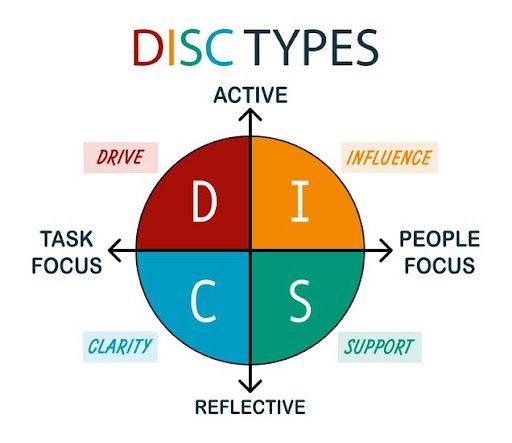
This is one reason I’ve found the DISC profile so valuable for business owners and leadership teams over the years. DISC doesn’t label people as good or bad leaders. It helps explain how they are wired to lead — and how that wiring affects communication, decision-making, delegation, conflict, and even stress.


If you’re new to DISC, here’s a quick overview:

  • D — Dominance
    Decisive, direct, results-focused, task-oriented.
  • I — Influence
    Expressive, optimistic, conceptual, people-oriented.
  • S — Steadiness
    Patient, thoughtful, supportive, relationship-oriented.
  • C — Conscientiousness
    Analytical, precise, questioning, task-oriented.


Most leaders are not purely one style. They are blends. That blend shapes how they sell, solve problems, manage teams, and respond under pressure.


One important note: the quality of the assessment matters. Validated DISC assessments are backed by research, highly accurate, and provide nuanced insight into both Natural and Adapted styles. Free versions can be helpful starting points, but they often lack the depth necessary for meaningful leadership development.


Over the years, I’ve heard many people assume that High D’s or High I’s make the best leaders or salespeople. It’s easy to understand why. They’re often visible, confident, fast-moving, and comfortable speaking up.


But real-world leadership tells a much more interesting story.
The Myth of the “Best” Leadership Personality


One of the biggest myths I see in leadership development is this:


Certain personality styles are simply “better leaders.”


The assumption typically sounds like this:
“High D’s and High I’s make the best leaders.”


But after years of coaching business owners and leadership teams, I’ve learned something important:


Leadership effectiveness isn’t about personality style. It’s about understanding and intentionally using your natural strengths.


Here’s what I consistently see in real businesses:


  • High D leaders drive momentum, make decisions quickly, and are naturally wired to see the big picture and set bold direction.
  • High I leaders inspire energy, communicate vision enthusiastically, and also tend to think conceptually and strategically about what’s possible.
  • High S leaders create trust, stability, and loyalty — creating the relational foundation teams need to execute effectively.
  • High C leaders raise standards, improve quality, and excel at analysis, precision, and tactical execution. They ensure the strategy actually works in real life by refining systems, reducing risk, and strengthening operational excellence.


Every style brings strengths.
Every style has blind spots.


Strategic vision often originates with High D and High I leaders who are wired to think ahead, see opportunity, and move the organization forward.


High C leaders strengthen and operationalize that vision, pressure-testing assumptions, tightening processes, and building the structure that makes growth sustainable rather than chaotic.


High S leaders anchor the organization relationally, ensuring change is implemented in a way that preserves trust, morale, and long-term loyalty.


When these strengths are understood and aligned, something powerful happens:


  • Vision becomes clear.
  • Systems become strong.
  • People stay engaged.


That’s when leadership stops being personality-driven and becomes strategically integrated.


The real problem isn’t your DISC style. It’s when you try to lead like someone you’re not or when teams don’t understand how their differences actually complement one another.


And this is where DISC becomes more than a personality tool. It becomes a leadership strategy.
Natural Style vs. Adapted Style: The Hidden Leadership Factor


One of the most eye-opening aspects of a validated DISC assessment isn’t simply whether someone is a D, I, S, or C.


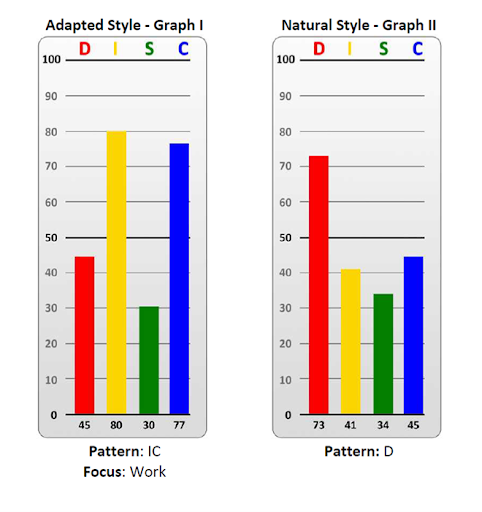
It’s the gap between their Natural Style and their Adapted Style.


Your Natural Style is how you’re wired. It’s how you tend to operate when you’re not trying to impress anyone, manage expectations, or conform to external pressure. This pattern remains relatively consistent throughout your lifetime.


Your Adapted Style reflects how you believe you need to show up in a particular environment — based on role expectations, company culture, leadership demands, or subtle, unspoken pressure.


Adapting isn’t bad. In fact, great leaders adapt constantly.


The key question is whether that adaptation feels intentional and energizing, or constant and draining.


When adaptation becomes extreme or sustained over time, it can quietly erode energy. Leaders may describe it as:


  • Feeling like they’re “on stage” all the time.
  • Working harder than they should to maintain presence.
  • Being unexpectedly exhausted in certain environments.
  • Quietly questioning whether leadership is supposed to feel this difficult.


Without a validated assessment, this nuance is often invisible.


I recently worked with a CEO whose Natural DISC profile showed very low Influence tendencies. Relationship-building behaviors weren’t his instinctive starting point. Yet in his Adapted profile, those Influence behaviors rose dramatically.


That shift could reflect growth and intentional development. Or it could signal sustained strain.


DISC doesn’t make that judgment for you. It simply makes the pattern visible so you can ask better questions.


Sometimes the breakthrough isn’t “becoming better.” It’s stopping the parts of leadership that were never meant to feel like a performance in the first place.


And that insight becomes even more powerful when we look at how it plays out in real leadership transitions.



Cynthia: A Leadership Transformation That Defied Stereotypes


She didn’t look like the “typical” leader everyone expected to succeed in her industry.


And that’s exactly why understanding her DISC profile changed everything.


Cynthia, a financial advisor, had built a successful practice. She was highly respected by her clients. Yet she had quietly topped out in her current environment. Opportunities and resources were being allocated in ways that didn’t reflect performance or long-term potential.


Instead of fighting the culture, she made a bold leadership decision: find an environment where her clients (and her values) could thrive.


Her DISC profile showed strong S and C tendencies.


Steady. Thoughtful. Relationship-centered. Detail-oriented. Analytical.


Not the style people often stereotype as a “natural” leader in competitive, sales-driven industries.


But those very strengths were the foundation of her success.


Cynthia built deep trust through patience, excellent questioning, consistency, and genuine care. Her clients were fiercely loyal. Referrals came naturally because people felt seen, understood, and supported.


As she prepared for a major business transition, we used DISC intentionally, not as labels, but as strategic insight.


We mapped her Natural strengths. We identified where she flexed.


We intentionally built a team around her with complementary DISC strengths to stabilize operations and enhance client communication during change.


On paper, the plan was solid.


In reality, the transition presented unexpected obstacles. Surprises surfaced. Systems didn’t transfer as smoothly as anticipated.


What stood out most was her calm.


She navigated difficult surprises with composure, transparency, and deliberate communication. She openly acknowledged challenges without dramatizing them. She expressed appreciation for her team consistently. She provided clarity about next steps.


Every member of her team chose to stay with her through the transition. They remain with her two years later.


That calm wasn’t accidental.


It reflected leadership aligned with her Natural style, not forced performance under pressure.


She could have tried to adopt a more aggressive persona to match industry stereotypes. Instead, she anchored more deeply into her steady, relational strengths, flexing into decisiveness and assertiveness when strategically necessary.


Her emotional intelligence became her competitive advantage.


The very traits she might once have underestimated became the reason her business thrived.


Where DISC Becomes a Leadership Multiplier


Here’s what I’ve learned after years of integrating DISC into leadership coaching:


Sustainable leadership doesn’t come from fitting a mold.


It comes from understanding your wiring, recognizing when and how to flex, and building environments where your strengths can operate at full capacity.


DISC is not about boxing people in. It’s about removing pressure to become someone else.


When leaders:

  • Stop chasing personality stereotypes,
  • Understand their Natural and Adapted patterns,
  • Build teams intentionally around complementary strengths, and
  • Communicate in ways others can actually receive,


Leadership becomes more sustainable.


Performance improves. Conflict decreases. Retention strengthens. Energy returns.


In Part II, we’ll move from self-awareness to application.


We’ll explore how to use DISC to:


  • Reduce team friction before it escalates,
  • Improve delegation and accountability,
  • Strengthen sales conversations,
  • Increase retention by aligning roles with natural strengths, and
  • Create communication strategies that work across styles.


Because DISC isn’t just about understanding yourself. It’s about leading in a way that allows your entire team to perform at their best.


For now, consider this:


  • Where does your leadership feel natural and energizing?


  • And where might you be adapting in ways that quietly drain you?


Sometimes the greatest leadership breakthrough isn’t becoming louder, faster, or more forceful. It’s becoming more aligned.


If this resonated, it may be time to take a closer look at how your leadership style is showing up in your business.


Where are you leading in alignment, and where might you be overextending?


If you’d like a structured way to gain that clarity, I’d be happy to continue the conversation.


Book time with me here
By Kathleen Winsor-Games January 16, 2026
People often ask, “What’s your why?” It’s a fair question, and an important one. But I ask something different: What is your Pinnacle Gift™? Your why matters. Purpose matters. Values matter. I learned the hard way, though, that purpose without clarity can still lead to burnout . Unless your why is paired with your Pinnacle Gift (the unique, high-value work only you are meant to do) you can stall, even when you’re deeply committed to meaningful work. What Do I Mean by Pinnacle Gift™? Your Pinnacle Gift goes beyond strengths, skills, or even “unique genius.” It’s why you are on the planet. It’s the work that: Comes most naturally to you and gives you energy. Creates the greatest impact for others. Generates the highest value. And feels most aligned with who you are. It’s the intersection of contribution, clarity, and confidence. And discovering it changes everything. I Had to Learn This the Hard Way Before I ever helped others through the maze of entrepreneurship, I had to navigate it myself. When I launched my first coaching practice, I felt that familiar rush of possibility, and then, shortly after, the wave of overwhelm. On the surface, things were going well. Clients were coming in. Momentum was building. Ironically, that’s when the pressure really hit. I had entered that universal phase of business ownership: You don’t know what you don’t know. And in business, what you don’t know can cost you time, money, confidence, and sometimes the business itself. I made mistakes not because I wasn’t capable, but because I didn’t yet have the clarity or structure I needed. I was working hard, just not always wisely. To make things worse, I carried a quiet belief that I should be able to do it all. Marketing. Operations. Sales. Finances. Strategy. Delivery. I thought that being a business owner meant being self-sufficient in every area. That belief was exhausting and heavy.
By Kathleen Winsor-Games December 4, 2025
Here’s something I don’t talk about often. When I first became a Business Coach, I was the classic overwhelmed business owner. You know the one: trying to do all the things, all at once, all by myself. From the outside, it looked like everything was working. Clients were showing up, referrals were coming in, and my calendar was full. On paper, it was the kind of momentum new business owners dream about. But momentum without structure is a dangerous combination. And behind the scenes, I was running myself into the ground. I was drowning in decisions, working far too many hours, and living squarely in that phase every entrepreneur knows but doesn’t often admit: the “you don’t know what you don’t know” stage. It’s humbling, stressful, and, if left unchecked, it becomes a breeding ground for burnout. Looking back, I can see exactly what was happening. I was operating purely out of effort, not clarity. I was filling every gap in the business simply because it needed doing. And I was carrying the weight of every single role because I believed I should be able to. Let me repeat that: I believed I should be able to . This wasn’t a capability issue. It wasn’t a lack of intelligence or commitment. It was a mindset trap; one that many small business owners, leaders, and managers fall into without even noticing. As a Small Business Coach, I see this constantly today: capable professionals who confuse responsibility with self-reliance. We assume strong leaders “figure everything out.” We convince ourselves that asking for help signals weakness, when in reality, it signals self-awareness, maturity, and strategic discipline. I wish someone had told me that sooner. Instead, I learned the lessons the hard way, so my clients don’t have to.
By Kathleen Winsor-Games November 10, 2025
The Real Odds (and How to Redefine Them) The statistics can be sobering for small business owners. One in five small businesses doesn’t make it past its first year. By year three, nearly 40% have closed their doors. By year five, about half have failed. Yet most of these businesses didn’t collapse because their owners lacked skill, drive, or passion. They failed because no one showed them how to build success by design, not by accident. As a Business Coach and Executive Leadership Coach, I’ve seen this pattern repeatedly. Every entrepreneur begins with a spark; an exciting vision of freedom, growth, and a sense of purpose. But maintaining that momentum requires more than determination. It requires clarity, structure, and strategic focus. True success in the first three years depends on five essential pillars: A clear market need for your product or service. Healthy cash flow and margin awareness. A business model that can scale sustainably. The right team or partners to share the load. Consistent marketing visibility to attract your ideal clients. When even one of these weakens, cracks appear. Left unaddressed, those cracks can threaten everything you’ve built. The good news is that you can fix them, starting now. November is the ideal month to “failure-proof” your business for 2026 while you still have time to act strategically. Why Businesses Fail and How to Stay Standing Businesses rarely fail overnight. Decline begins quietly; a missed review, a delayed decision, a loss of focus amid busyness. The owners are working hard, but not necessarily on the right things. What separates those who thrive from those who falter is perspective. The most successful entrepreneurs know when to pause, step back, and evaluate objectively. They invest time in reflection, and when necessary, reach out for Executive Coaching or Small Business Coaching to gain outside insight. The goal isn’t perfection; it’s awareness. Once you clearly identify the risks, you can adjust your course before minor issues become major setbacks.
By Kathleen Winsor-Games August 29, 2025
If your business feels like it’s running in place, it’s not because you aren’t working hard enough. In fact, let’s be honest—you’re probably working too hard. The real problem? You’re stuck in the same gear, mistaking “busyness for progress.” Plateaus are normal in business. Staying there is optional. The difference between stagnation and breakthrough growth isn’t more hustle. It’s knowing when and how to pivot. Here’s the truth: working harder on the wrong things wears you out faster. Working smarter on the right things changes everything. That’s why in the Pinnacle Success System™, we start with clarity—aligning your business with your Pinnacle Gift™—and then focus relentlessly on high-impact actions. It’s not about doing everything. It’s about doing the right things and creating space to lead, innovate, and grow. Step One: Audit Your Time for Growth The simplest way to begin is by running a quick micro time audit. For one workday, jot down everything you do—every meeting, email, client call, or errand. At the end of the day, put a star next to anything that directly drives revenue or long-term growth. Those are your high-value activities. Circle the rest. That’s your low-value zone, the territory ripe for delegation, automation, or elimination. As a bonus, take note of which high-value activities actually energize you. These are clues to your Pinnacle Gift, the unique zone where you create the most significant impact. Scaling your business isn’t about grinding harder. It’s about shifting into growth mode by leveraging your strengths, refining your focus, and building systems that free you up to lead. This brings us to the second trap that holds back too many small business owners.
By Kathleen Winsor-Games July 25, 2025
If my July social media posts had a theme, it was this: Stop running your business like a one-person rescue mission. All month long, we explored one of the most powerful and overdue shifts a small business owner can make—moving from scrappy, overworked solopreneur to confident, strategic CEO. It’s a shift that unlocks growth, sanity, and sustainability—but only if you're willing to do the deep (and often uncomfortable) work. Let’s walk through the key lessons from this transformation, one powerful step at a time. 7 Signs You're Ready to Level Up Still calling yourself a freelancer? It might be time for an upgrade. There’s a big difference between being self-employed and being a business owner. One trades time for money. The other builds something that can grow without you. Here are seven signs you’re ready for the shift: Your calendar is full, but your income has plateaued You’re constantly putting out fires instead of planning ahead You dream about taking a vacation… but can’t unplug You’ve hit the limit of what you can do alone You’re attracting more opportunities than you can handle You’re doing high-level work and low-level tasks—daily You know there’s a bigger vision for your business… but you’re stuck in the weeds If even two of these hit home? You’re not just ready—you’re overdue for a change. Let’s talk about how to make that leap.
By Kathleen Winsor-Games June 30, 2025
Innovation Isn’t Optional Anymore Staying the same is a risk. After guiding business owners through multiple economic downturns, I’ve learned that innovation isn’t about flair or flash. It’s about survival—and relevance. Here’s the truth: What worked last year might stall this year. But here’s the good news—innovation doesn’t require a Silicon Valley budget. Sometimes, it’s as simple as improving your onboarding process, rethinking how you re-engage past clients, or packaging your expertise in a more scalable way. Start here: Choose one area—your offer, your delivery, or your customer experience. Then ask: What’s one experiment I can run this quarter? Small shifts often spark big momentum. Innovation Starts with You The best innovations don’t come from mimicking others. They come from alignment with what you do best. When you’re grounded in your Pinnacle Gift™—your unique brilliance—creativity flows naturally. If you’re forcing innovation, check your energy first. Review your calendar: What drains you? What lights you up? Double down on what energizes you. Let go—or delegate—the rest.  When your energy aligns with your genius, innovation becomes your natural next step.
By Kathleen Winsor-Games June 19, 2025
Because growth shouldn’t be a guessing game. At Capstone Coaching Group, we’ve spent years working closely with small business owners, supporting them through the highs, the lows, and the in-between moments when it’s not quite clear what the next move should be. Along the way, we started noticing a pattern. Clients who worked with us one-on-one consistently told us that coaching gave them something they hadn’t found anywhere else: clarity, accountability, and forward momentum . They left each session with a renewed sense of purpose and direction. Meanwhile, business owners who joined our Peer Advisory Boards found something equally powerful: a confidential community of fellow entrepreneurs. Here, they could solve real problems, speak openly, and feel supported—not judged. The feedback was clear. These collaborative boards were a game-changer, providing a much-needed relief from the isolation that often comes with entrepreneurship. Others went through our Pinnacle Success System™ courses, discovering their Pinnacle Gift™, learning how to structure their time and achieve Pinnacle Productivity™, designing their Pinnacle Offering™, and scaling their business by crafting their Pinnacle Process™. Every course led to breakthroughs. But then something bigger happened. Clients who engaged in all three—coaching, peer advisory boards, and the Pinnacle Success System™—saw exponential progress. The combination created a synergy that accelerated their growth far beyond what any single element could do alone. And just like that, the idea sparked: What if we built a program that delivered the whole experience—strategic coaching, powerful community, proven tools—under one roof?
By Kathleen Winsor-Games May 30, 2025
In today’s turbulent economy, one thing is crystal clear: standing still is not a strategy. Markets are shifting. Customer needs are evolving. Competition is fiercer than ever. If you’re a small business owner, reacting to change isn’t enough anymore—you need to lead it. Adaptability is no longer optional. It's the price of entry into a future where only the most resilient businesses thrive. Those business owners who anticipate and plan for change will stay in the game. Those who don't may find themselves outpaced, outperformed, or out of business. So how do you prepare for what's next without burning out or blowing up your business model? Let’s take a deeper look at what it takes to not only survive change—but use it as a competitive advantage. Adaptability as a Strategic Advantage Proactive change management is quickly becoming one of the most important business skills of our time. It’s not enough to be great at what you do—you must also be great at evolving when the market demands it. Ask yourself: How quickly can your team pivot when the unexpected hits? Do your systems empower change—or strangle it? Are you building a brand that stands out when others are shrinking back? Now is the time to review, refine, and rebuild with resilience at the core. Choose one process, product, or service this week and stress-test it: If the market shifted tomorrow, would this still work—or would we scramble? Small adjustments today can prevent big regrets tomorrow.
By Kathleen Winsor-Games April 30, 2025
The first quarter is behind you. But before you charge into Q2 full speed, let me offer this: pause with purpose. In the daily whirlwind of small business ownership, it’s easy to stay busy but miss the bigger picture. That’s where a strategic quarterly review comes in—not as a judgment session, but as a tool for clarity and course correction. Ask yourself: What did I plan? What actually happened? And most importantly—what do I need to shift now to move forward with greater focus, alignment, and momentum? In this article, we’ll walk through five critical areas every small business owner should assess at the close of Q1—financials, marketing, team, time, and tools. Use this as your reset ritual. You’ll come out sharper, stronger, and more prepared to lead the next 90 days with intention. Financials First—Are You on Track? Revenue, profit, and cash flow are the pulse of your business. That’s why we begin here. Start your Q1 review by looking at the numbers—not just how much you made, but what you kept, and how well your money moved. Even if you’re not a finance pro (I’m certainly not a CPA, nor do I play one on TV 😊), understanding your numbers is a non-negotiable leadership skill. Ask yourself: What was your gross revenue vs. net profit? Are your expenses aligned with your growth goals—or eating into margins? What do your receivables and payables say about your cash flow health? If the numbers aren’t telling a clear story, it’s time to clean them up. Don’t wait for tax season to find out where your profits went. Financial clarity builds confident decision-making—and that’s the foundation for a strong Q2.
By Kathleen Winsor-Games March 30, 2025
The Scaling Dilemma—Are You Ready to Expand? Scaling a business is exciting—but also nerve-wracking. You’ve worked hard to build momentum, and now you’re wondering: Is it time to grow? And if so, how do I do it without losing what’s already working? Many business owners hit a point where they’re turning down opportunities, struggling to keep up with demand, or sensing that their current model can’t take them further. Growth isn’t just about more revenue—it’s about building capacity with intention. Signs You’re Ready to Scale: You’re regularly turning down work because your plate is full. Clients are asking for additional services or support. Your systems (and maybe your sanity) are straining under the current load. If any of these sound familiar, you're likely at a crossroads. The good news? With the right strategy, scaling can actually bring more ease, not just more work. Let’s explore how to grow your business wisely—without burning out or getting overwhelmed. Hiring vs. Outsourcing—Which One Fits Your Growth Plan? One of the first decisions you’ll face is whether to bring on help—and if so, what kind. Hiring an employee may feel like a big leap. But so is continuing to do everything yourself. The key is understanding what kind of support will move the needle without bogging you down. Hire when: The role is critical to your core business operations. You need someone consistently and long-term. You want to build a cohesive team with shared values and vision. Outsource when: The task isn’t in your Pinnacle Gift™—your zone of genius—and doesn’t need to be done in-house. You need short-term or specialized expertise. You want to test a role before committing to a full-time hire. Think of hiring as building your foundation—and outsourcing as adding flexible scaffolding. Both support growth, but in different ways.